Learn About Bioluminescence in Cocoa Beach

Click the Tabs to Learn More!
What is Bioluminescence?
Bioluminescence is a natural phenomenon in which living organisms produce visible light. In marine environments, this glow is most often created by microscopic phytoplankton that emit a soft blue light when the water around them is disturbed. The light is produced through a chemical reaction inside the organism that oxidizes a molecule called luciferin and is triggered by physical movement in the surrounding water.
This response serves ecological purposes such as predator deterrence and communication, including mating signals. For observers, it results in one of the most striking natural nighttime displays found anywhere in the world, where even the smallest movement can cause the water itself to glow.


Bioluminescence in Cocoa Beach and The Indian River Lagoon


The Indian River Lagoon near Cocoa Beach is one of the most reliable places on Earth to witness bioluminescence. At night, movement through the lagoon produces sweeping trails of blue light. Paddle strokes, passing fish, and even gentle ripples illuminate the surface, transforming the lagoon into a living light show that has made Cocoa Beach famous worldwide.
During the warmer months, the lagoon supports dense concentrations of Pyrodinium bahamense, a bioluminescent microalgae responsible for the lagoon’s brightest glowing water.
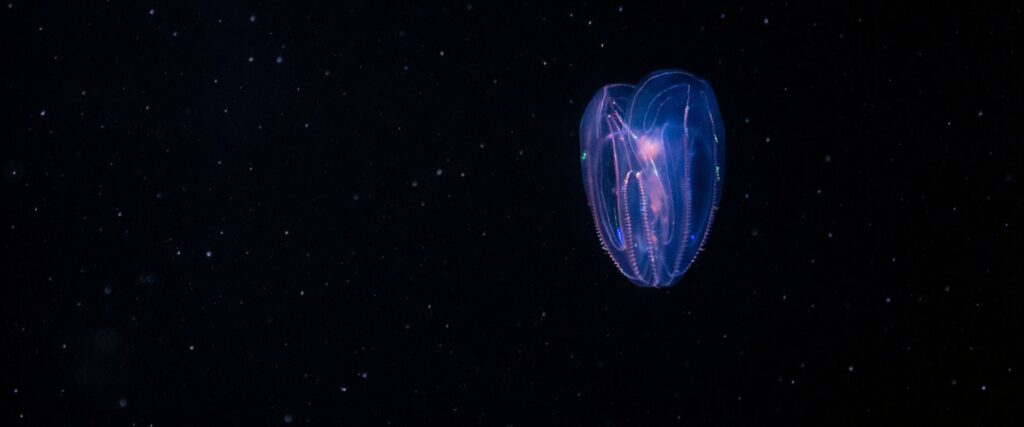
In cooler months, bioluminescence is more commonly seen from comb jellies, offering a subtler but equally fascinating display. These transparent, jelly-like creatures emit brief flashes of light when disturbed, creating soft, sparkling bursts beneath the water’s surface.
Why Does the Indian River Lagoon Glow So Brightly?
There are several natural conditions that make the Indian River Lagoon especially well-suited for bioluminescence:

Does the Moon Affect Bioluminescence?
The moon does not affect bioluminescence itself, which is produced by living organisms. However, moonlight can influence how easily it is seen.
On clear nights with a bright, nearly full moon, increased ambient light can reduce contrast, making the glow less visible in open areas of the lagoon. For this to occur, the moon must be both nearly full and above the horizon during nighttime hours.
Under these conditions, bioluminescence is often easier to observe in sheltered areas where shoreline vegetation or mangroves help block ambient light. Even on bright moonlit nights, bioluminescence can still be observed in the Indian River Lagoon.