Discover One of North America’s Most Diverse Coastal Ecosystems

Click the Tabs to Learn More!
The Indian River Lagoon
West of the beaches in Cocoa Beach, the Indian River Lagoon is one of the most biologically diverse estuaries in North America. It is home to thousands of plant and animal species and stretches more than 150 miles, from Ponce Inlet in the north to Sebastian Inlet in the south.
The lagoon’s waters are brackish, meaning they are a mix of fresh and saltwater. This unique balance creates ideal conditions for an extraordinary range of wildlife, especially in the waters closest to Cocoa Beach, which form part of the Thousand Islands Conservation Area.
Scientists often describe the lagoon as a vital nursery for marine life along Florida’s east coast, supporting countless species during their earliest and most vulnerable stages. Its shallow depth and protected channels also make it one of the most productive estuarine systems in the United States.
Accessible only by water, this protected region is best explored by kayak, which offers a quiet, immersive way to experience its habitats and wildlife up close.


The Thousand Island Conservation Area
The Thousand Islands Conservation Area encompasses more than 300 acres of mangrove islands and waterways and supports an incredible variety of life, including manatees, dolphins, fish and rays, reptiles, shorebirds and wading birds, and crustaceans and invertebrates.
Its maze of calm channels, mangrove tunnels, and hidden lagoons makes it one of the most scenic and wildlife-rich kayaking destinations in Florida.


Mangrove Habitats
Mangrove forests form the foundation of the lagoon’s ecosystem. Three primary species dominate the shoreline and islands: red mangroves, black mangroves, and white mangroves.

Red Mangroves
Red mangroves are easily recognized by their reddish “prop roots” that extend down into the water. Growing up to 20 feet tall, these roots:
-
Stabilize shorelines
-
Reduce erosion and storm impact
-
Trap sediment
-
Provide shelter for fish, crabs, and juvenile marine life
They also filter salt from the water, allowing the trees to thrive in brackish conditions. By forming dense coastal forests, red mangroves help buffer inland ecosystems from waves and flooding while improving water clarity and supporting rich coastal food webs.
Black Mangroves
Black mangroves typically grow farther inland and can reach heights of 50 feet. They are identified by their black, finger-like root structures that protrude upward from the soil to absorb oxygen.
Unlike red mangroves, black mangroves absorb salt from the water and release it through their leaves, often leaving visible salt crystals on the surface. These specialized roots:
-
Allow the tree to breathe in low-oxygen, waterlogged soil
-
Improve soil stability in coastal wetlands
-
Help prevent erosion in tidal areas
-
Support small marine organisms and microorganisms


White Mangroves
White mangroves also grow up to 50 feet tall and are usually found farther inland than red and black mangroves. While they resemble traditional trees, they are well adapted to salty and brackish environments. These adaptations include:
-
Waxy leaves that reduce water loss
-
Salt-secreting glands on their leaves
-
Flexible root systems that tolerate shifting soils
-
High tolerance to drought and changing tides
Together with red and black mangroves, white mangroves help form resilient coastal ecosystems. They contribute to shoreline stability, improve water quality, and provide habitat for birds, insects, and small wildlife.
Seagrass Beds
In the lagoon’s open areas, expansive seagrass beds thrive under the surface. Though often mistaken for seaweed, seagrasses are flowering plants that evolved from land species and are among the most productive ecosystems on Earth.
Just one acre of seagrass can produce over 10 tons of plant growth per year and support:
-
Up to 40,000 fish
-
Tens of millions of invertebrates
-
Essential feeding grounds for manatees
-
Nursery habitats for young marine life

Mammals of the Indian River Lagoon
Only two marine mammals live in the Indian River Lagoon, but both are iconic to Florida and deeply connected to the region’s natural identity: the Atlantic bottlenose dolphin and the Florida manatee.
These species rely on the lagoon’s warm, shallow, food-rich waters year-round for feeding, breeding, and shelter. Their continued presence is also an important indicator of the lagoon’s ecological health, making them not only beloved by visitors but vital to scientists and conservationists working to protect this fragile ecosystem.

Dolphins of the Indian River Lagoon
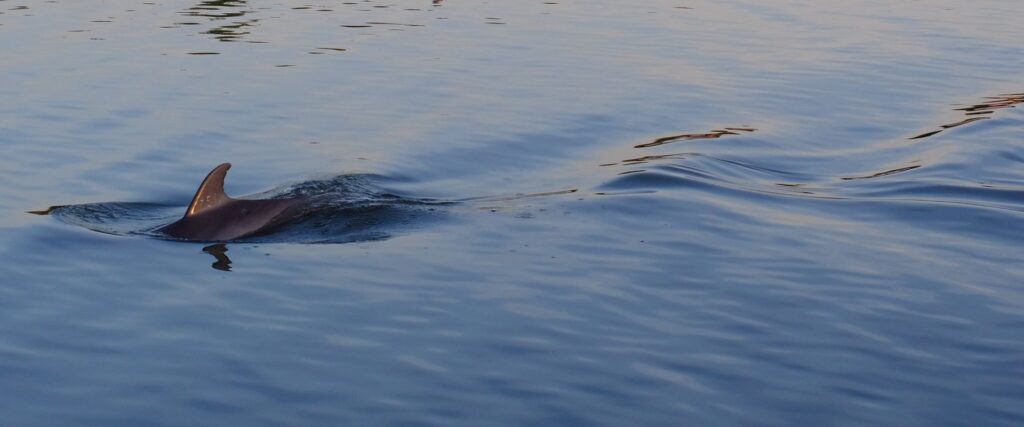
The lagoon is home to an estimated 800 Atlantic bottlenose dolphins.
These intelligent mammals typically grow to about 8 feet long and weigh around 500 pounds. Their breeding and calving seasons peak in April and August, and it is common to see mothers swimming alongside their calves during kayak tours.
Dolphins consume approximately 4–5% of their body weight daily and often hunt by stirring up water near mangrove roots to flush fish into open areas to feed.
While their usual swimming speed is 3–7 mph, they can reach bursts of up to 20 mph when chasing prey or cooling off in warm water.
Manatees of Cocoa Beach
Often called the “sea cows of Florida,” manatees are gentle, slow-moving herbivores and the largest marine mammals in the lagoon.
Florida manatees typically measure around 10 feet long and can weigh over a ton. Despite their size, they are peaceful animals whose closest living relatives are elephants.
They spend 6–8 hours per day feeding on seagrass and consume roughly 8% of their body weight daily, a routine well supported by the abundant vegetation of the Indian River Lagoon. When active, they surface every few minutes to breathe, but when resting they may remain underwater for up to 20 minutes.